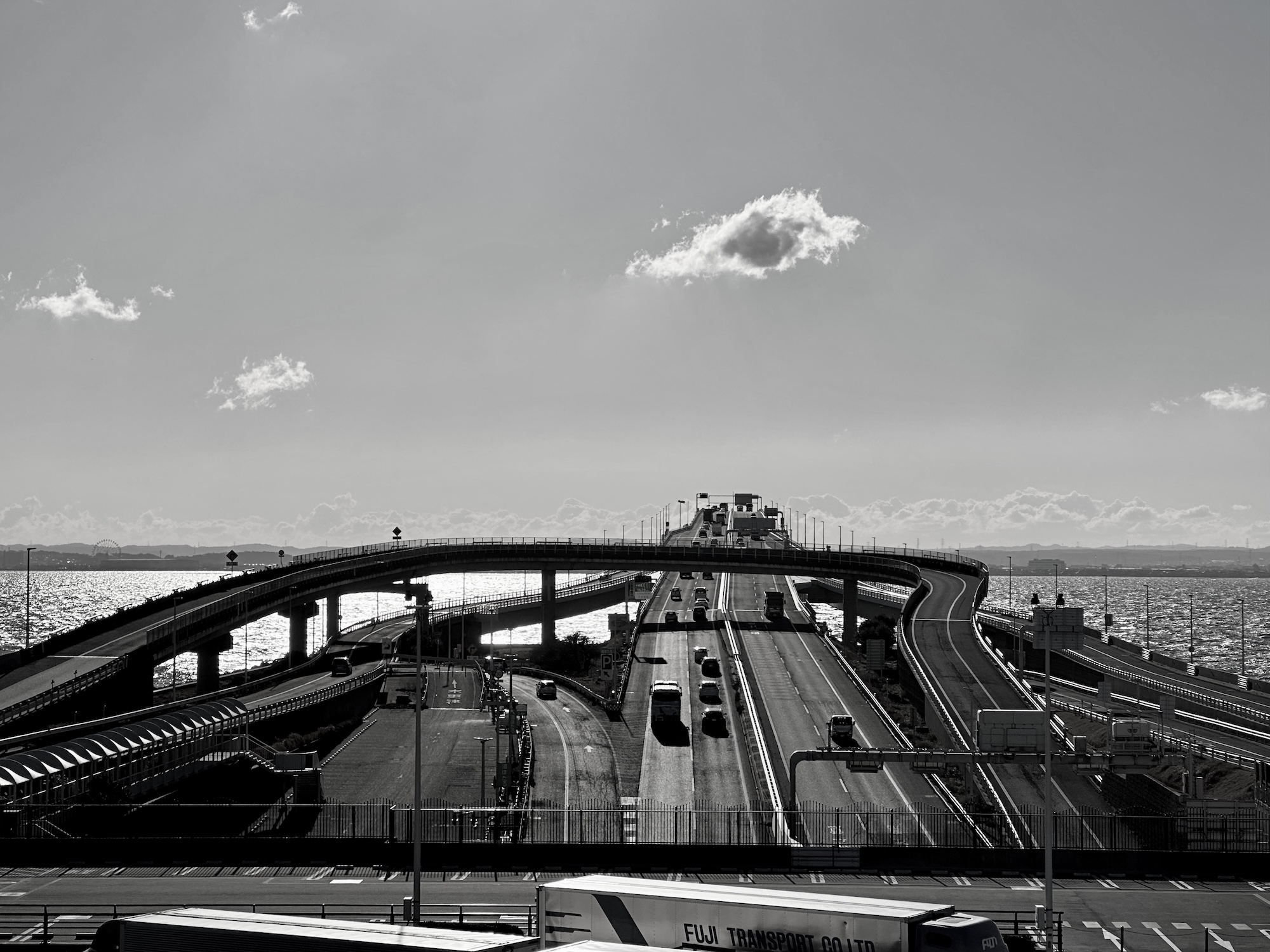
Color usually conveys a lot of information. In most cases, that’s true. But sometimes, like in cityscapes, color is just part of the symbolism. That’s why I prefer monochrome photography. Some information may be lost, but rather, information such as shapes that you don’t notice in color may be added, and the photo may be found to be fail. This photo was taken with an iPhone. I had my camera with me, but I needed mobility, so I left the camera in the car and took the photo with my iPhone. If you can’t look through the viewfinder, you may actually take more interesting photos by a smartphone.
(日本語は下に) I haven’t have any opportunity to take out my camera to take pictures this week. Above picture is from my stock.
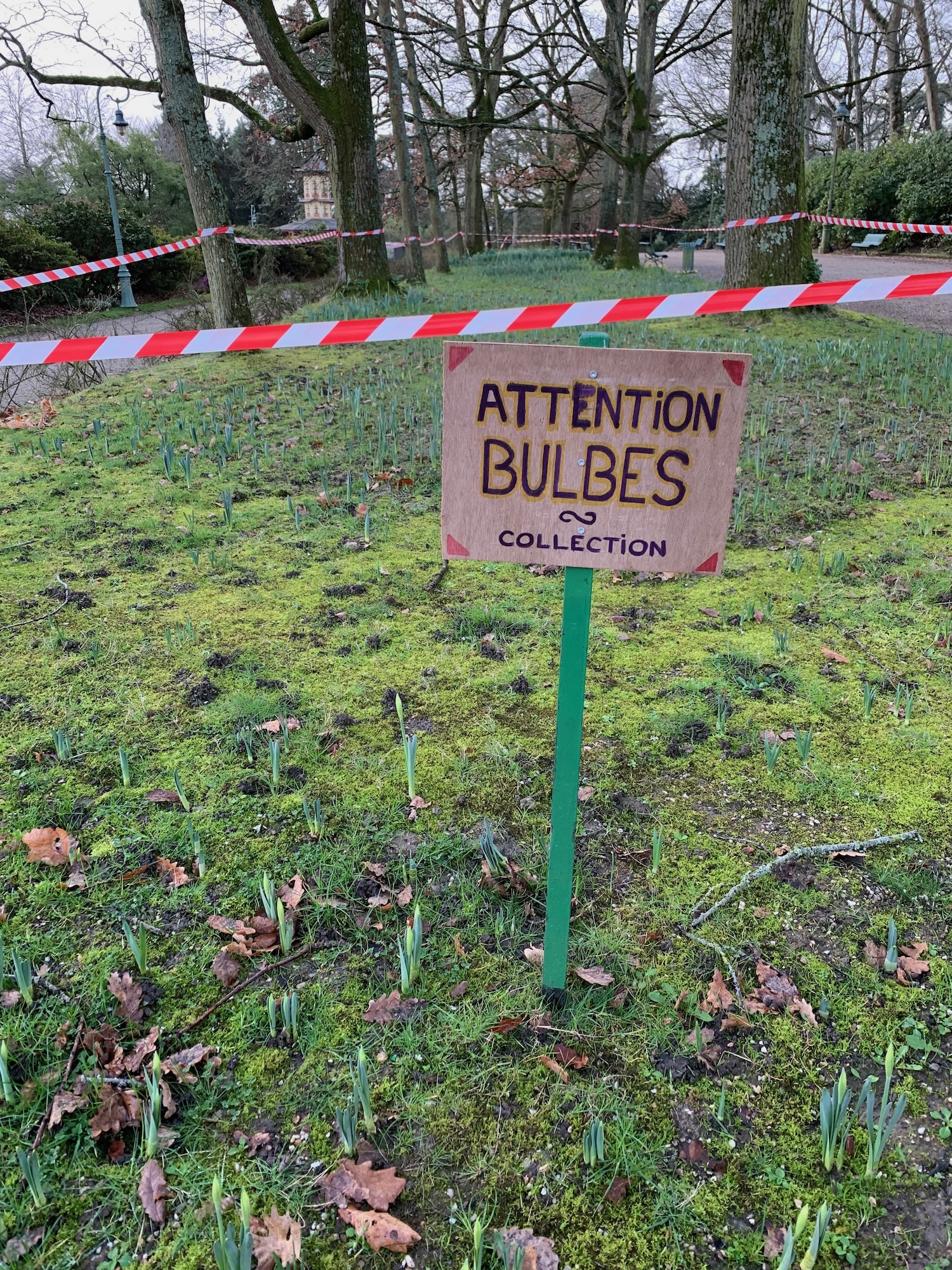
In fact, I took this picture for my memorandum to learn foreign languages at first. As you may know, my mother language is Japanese and the second language is English. Interestingly, around for 20 years, I was working with French colleague and the common language was English, not in French. However, obviously, I have had a lot of opportunities to communicate in French. On above picture, it says ‘Attention Bulbes, Collection’ and it confused me. Those words seem to have no big differences from English but clearly to be written in French. ‘Bulbes’ includes ‘e’. Perhaps it can start with ‘Caution’. It interested me.
After thinking about languages, I found that another interesting point. A notice board had a green pillar probably to blend in with the surroundings. On the other hand, the protected area was surrounded by red tape, complementary color. It looked inconsistent. Eventually, I decided to keep a picture for my future blogging.
This week, strictly speaking, my post is not a part of ‘Photo’ challenge but hopefully you could be interested in.
Everything I loved has been lost: the chestnut farm, the small woods, the birds singing. Instead, a big building for the elderly is going to be built. Obviously, it is understandable that such infrastructure needs to be prepared for an ageing society. The open question is whether a place can really withstand an ageing society when it has lost its natural environment. Nobody knows the answer.
The city where I was born and raised is about four hours away from the city where I live now. In a sense, it is on the very outer edge of Tokyo’s residential area, and is also a part that has been urbanized without exception. Since leaving the city when I was 18, I have visited there many times, and the city has really changed in the last 20 years. Interestingly, I get lost several times in the city I should know.
Even though, I’m not pessimistic. Still nature I know is here and there. I miss a lot of thing and it would be necessary process to change. Our society and nature is resilient, I believe.
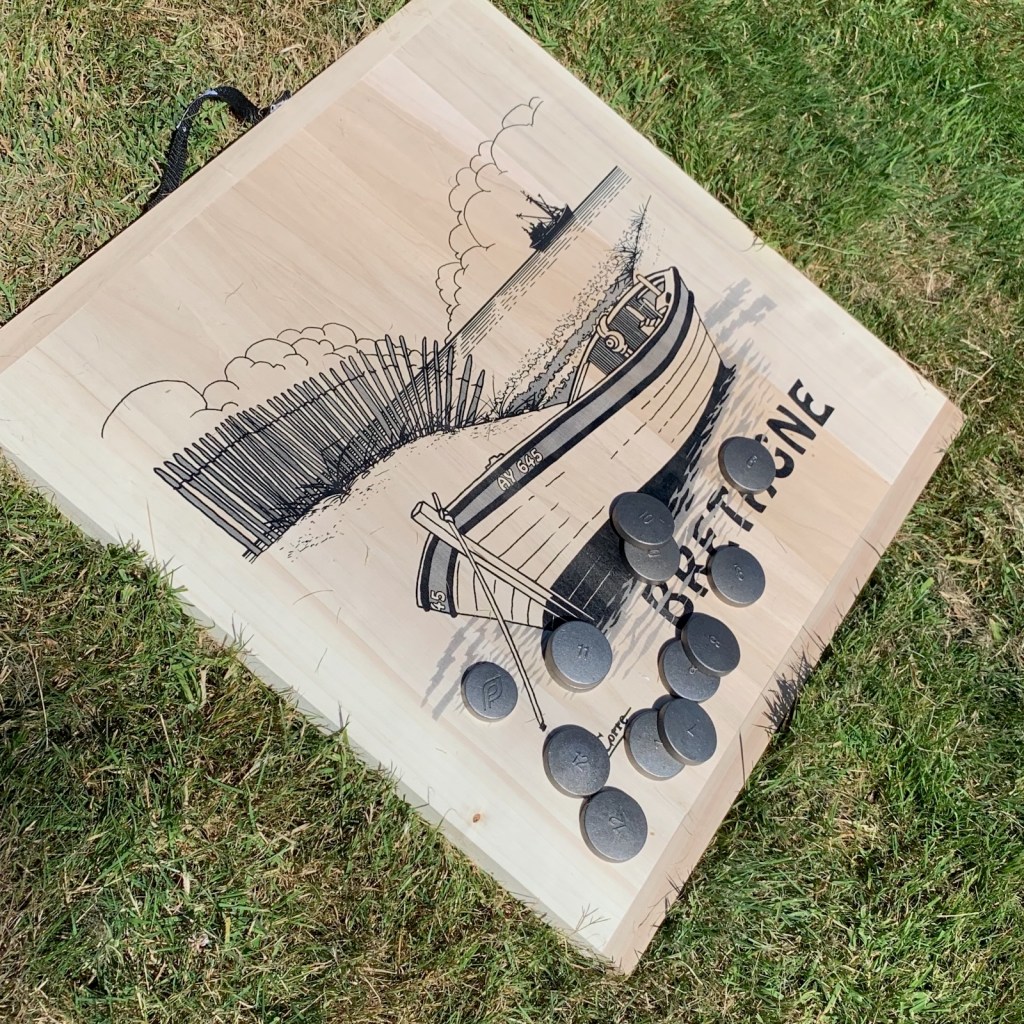
パレ・ブルトンというと、ガレットというフランスのバタービスケットのことを指す場合が多い。実際のところ、’palets bretons’ を検索すると、ほぼ間違いなくガレットの紹介記事(英語)がヒットする。明確な定義はないが、薄いバタービスケットがガレットであり、厚みのあるものがパレ・ブルトンである。 このブルトンというのはフランス北西部にあるブルターニュ地方のことであり、このブルターニュ地方でガレットというと蕎麦粉の食事クレープを指す。デザートの小麦粉のクレープはクレープであり、ガレットを出すレストランをクレパリーと言う。ブルターニュには、いたるところにクレパリーがあり、ブルターニュ人にどこが美味しいかなんて聞いたら議論百出である。 この段階ですでにかなりややこしいことになっているが、日本語でいくら「パレ」や’palets bretons’を検索しても出てこないのが、 ‘le jeu de palets breton’ (パレ・ブルトン・ゲーム、単にパレと言う)である。トップの写真はまさにその ‘le jeu de palets breton’ なのだが、これだけ見てもよく分からないに違いない。あえて言うなら、モルックやペタンクのようなスポーツと遊びの中間のゲームである。きっと日本だと競技人口は限りなく0に近い。今ならもれなく日本代表候補になれそうなんて思ったが、案外難しいのでやめておいた方が良さそうだ。(デカトロンの紹介記事 フランス語ですが写真がありますのでどうぞ)
Palet Breton often refers to galette, a French butter biscuit. In fact, if you search for ‘palets bretons’ on the web, you will almost certainly find some articles introducing galette. There is no clear definition, but a thin butter biscuit is a galette, and a thick one is a palet breton.
Breton here refers to Brittany, a region in northwestern France, and in Brittany, galette refers to a buckwheat crepe. A wheat flour crepe for dessert is called a crepe, and a restaurant that serves galettes is called ‘creperie’. There are a lot of creperies all over Brittany, and if you ask a Breton which one is the best, there will be endless arguments.
At this stage, things are already pretty confusing, but no matter how much I search for ‘palet’ or ‘palets bretons’ in Japanese, I can’t find anything: ‘le jeu de palets breton’. The top photo is exactly that, ‘le jeu de palets breton’, but even just looking at this, I’m sure it’s hard to understand. If I had to say, it’s a game that’s somewhere between a sport and a game, like Mölkky or Pétanque. I’m sure the number of players in Japan is close to zero. I thought that right now I could be a candidate for the Japanese national team without fail, but it’s surprisingly difficult, so I think it’s better to give up. (Decathlon article in French)
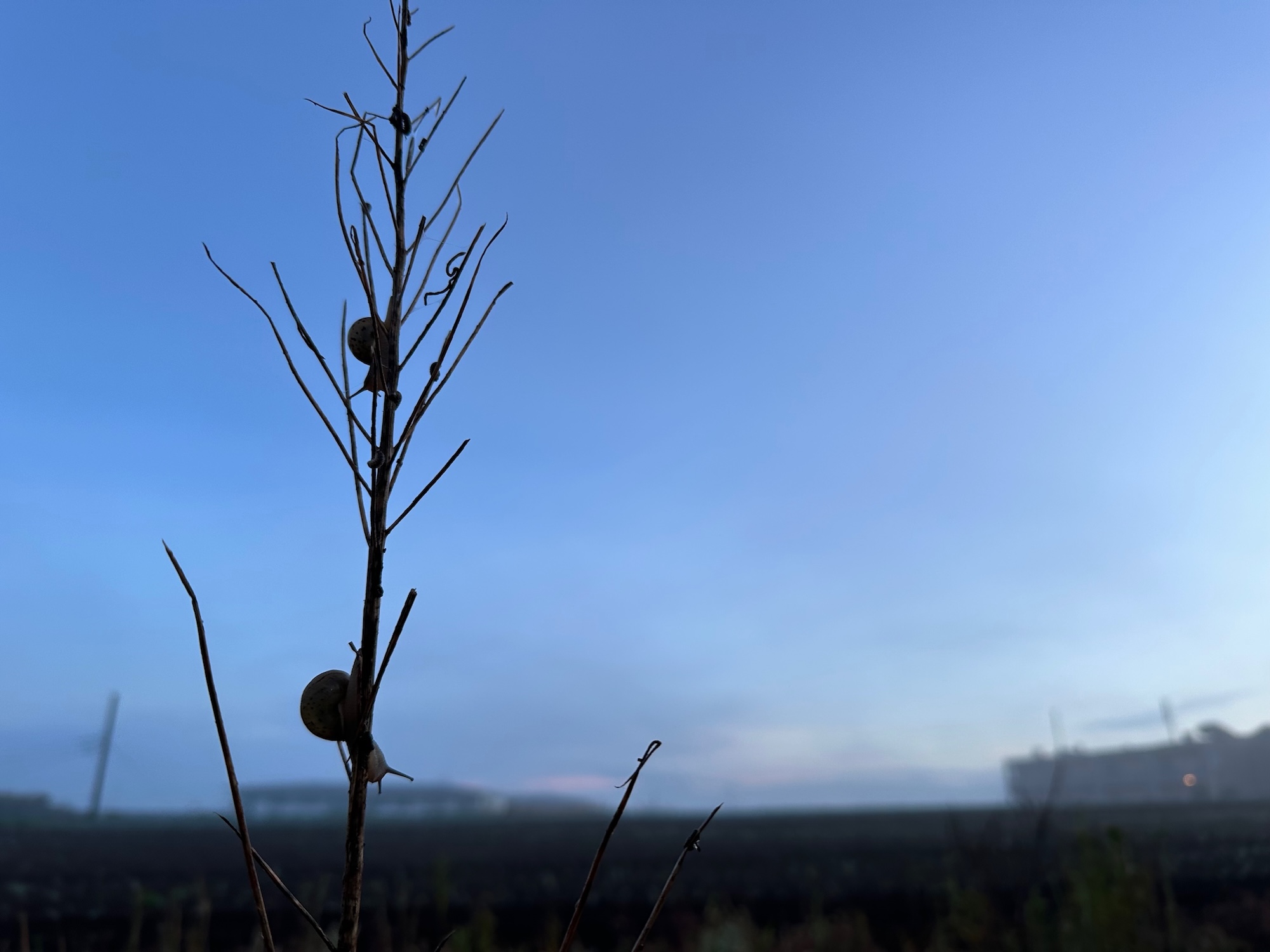
The photo above was taken on the same day about four years ago. I had mostly nothing to do there in France under pandemic yet it was blooming as usual. I’m not there several days but back to you soon.